Click on the image for FULL RES |
||||
| Name / Constellation | NGC 7635 |
Other: C 11; Sh2-162; GC 4947; Bubble nebula | Cas |
|
| Coordinates | AR: 23h 20m 45.5s - Dec: +61° 12′ 45″ | |||
| Optics | Takahashi FSQ 106N APO Fluorite F5 - 60/220 guiding refractor | |||
| Camera-Mount | SBIG STF8300M - Orion StarShot Guider - 10Micron GM2000 QCI Mount | |||
| Filters | Baader Ha - Oxy3 | |||
| Exposure |
|
|
|
|
| Location / Date | Promiod (Valle D'Aosta-Italy) "TLP" Remote Observatory - 28/29 sept 2019 | |||
| Seeing | About 3" @ 2.1 arcosec/pixel unbinned | |||
| Note | Bi-color palette | |||
| Acquisition | MaxIm DL - CCD Autopilot 5 | |||
| Processing | Adobe Photoshop CS6 -  |
|||
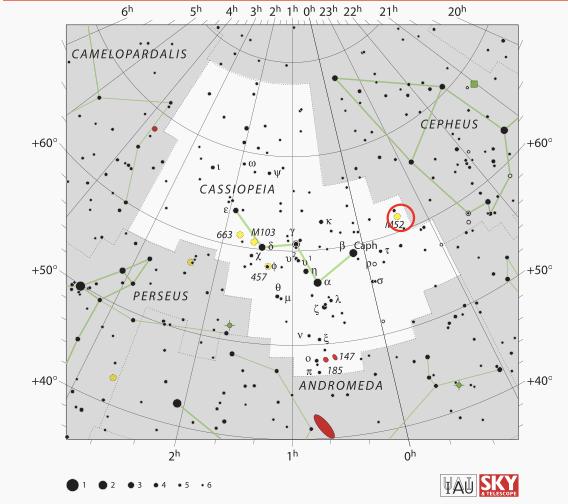
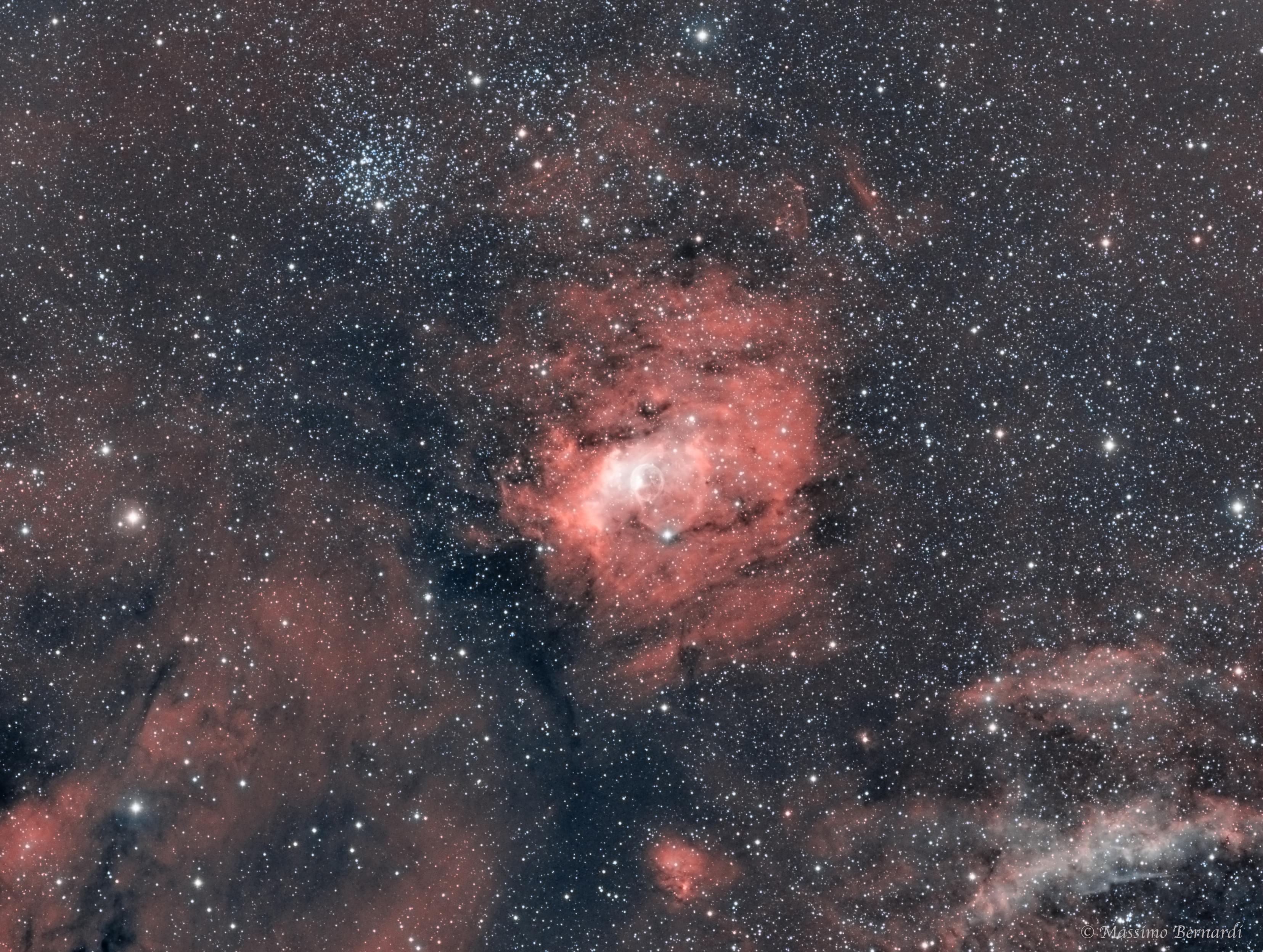
| Comment | NGC 7635, also known as the Bubble Nebula, Sharpless 162, or Caldwell 11, is an H II region emission nebula in the constellation Cassiopeia. It lies close to the direction of the open cluster Messier 52. The "bubble" is created by the stellar wind from a massive hot, 8.7 magnitude young central star, SAO 20575 (BD+60°2522). The nebula is near a giant molecular cloud which contains the expansion of the bubble nebula while itself being excited by the hot central star, causing it to glow. It was discovered in 1787 by William Herschel. The star BD+60°2522 is thought to have a mass of about 44 M☉.
|
|||