Click on the image for FULL RES |
||||
| Name / Constellation | M 36 |
Other:NGC 1960, Cr 71, Mel 37, Lund 191, h 358, GC 1166, OCL 445 | Aur |
|
| Coordinates | AR: 05h 36m 17,7s- Dec: +34° 08′ 27″ | |||
| Optics | Takahashi FSQ 106N APO Fluorite F5 - 60/220 guiding refractor | |||
| Camera-Mount | SBIG STF8300M - Orion StarShot Guider - 10Micron GM2000 QCI Mount | |||
| Filters | Baader RGB | |||
| Exposure |
|
|
|
|
| Location / Date | Promiod (Valle D'Aosta-Italy) "TLP" Remote Observatory - 17 feb 2018 | |||
| Seeing | About 3.8 " @ 2.1 arcosec/pixel unbinned | |||
| Note | ||||
| Acquisition | MaxIm DL - CCD Autopilot 5 | |||
| Processing | Adobe Photoshop CS5 -  |
|||
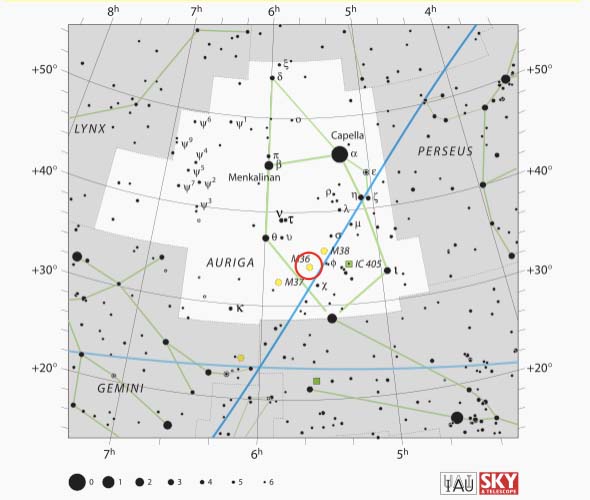
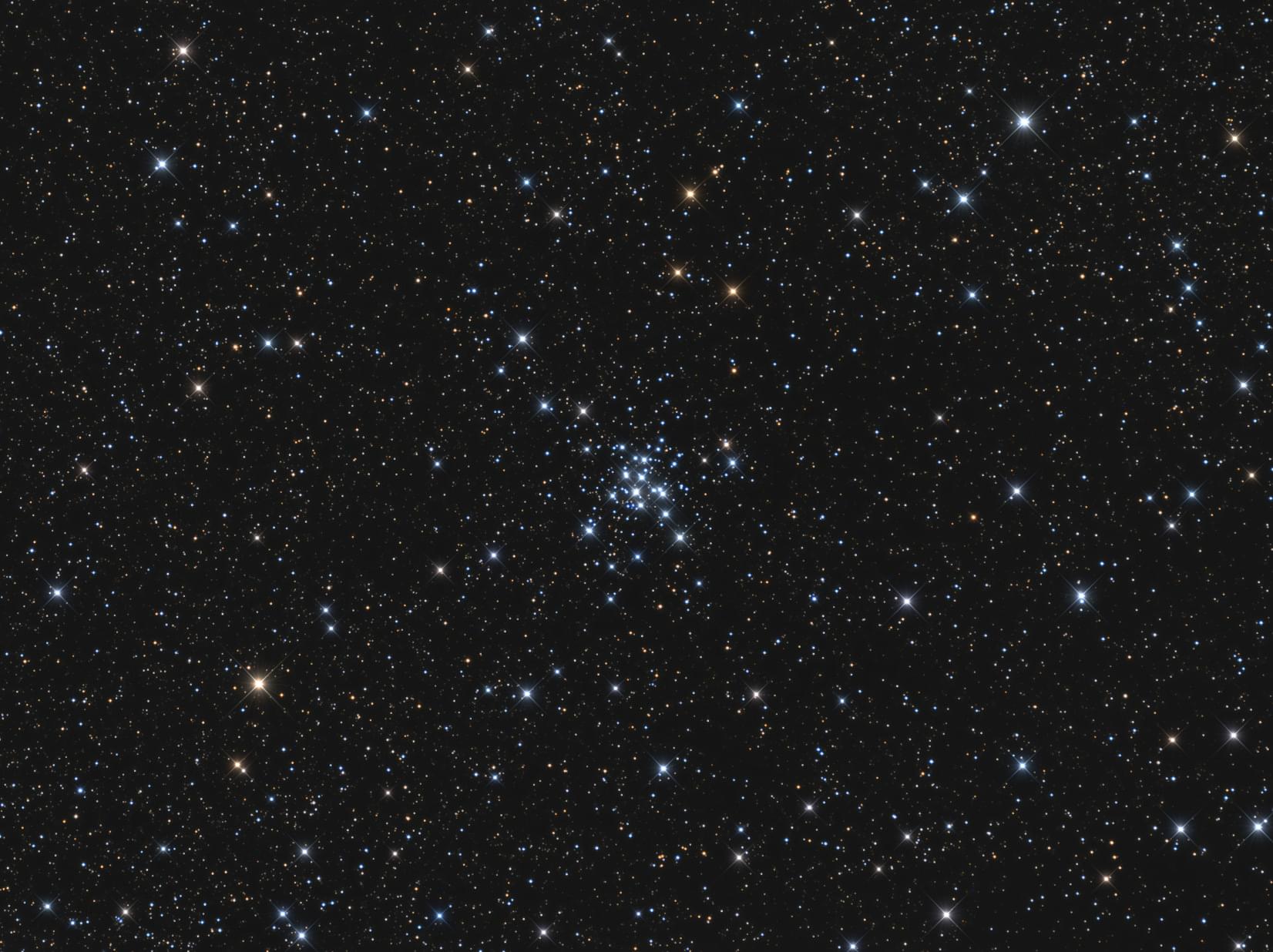
| Comment | Messier 36 (also known as M36, or NGC 1960) is an open cluster in the Auriga constellation. It was discovered by Giovanni Batista Hodierna before 1654. M36 is at a distance of about 1300 pc. (4,100 light years) away from Earth and is about 14 light years across. There are at least sixty members in the cluster. The cluster is very similar to the Pleiades cluster (M45), and if it were the same distance from Earth it would be of similar magnitude.
|
|||