Click on the image for FULL RES |
||||
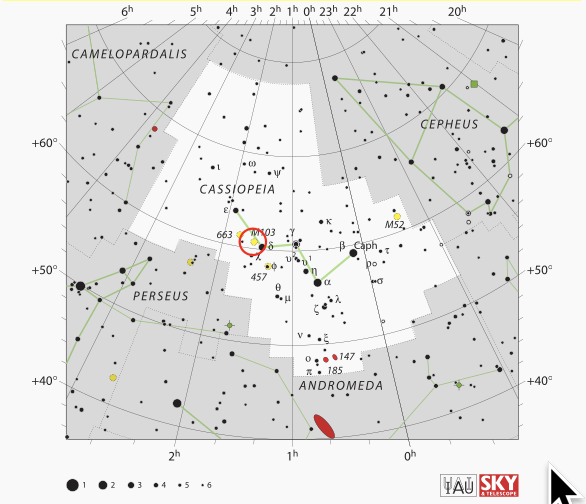
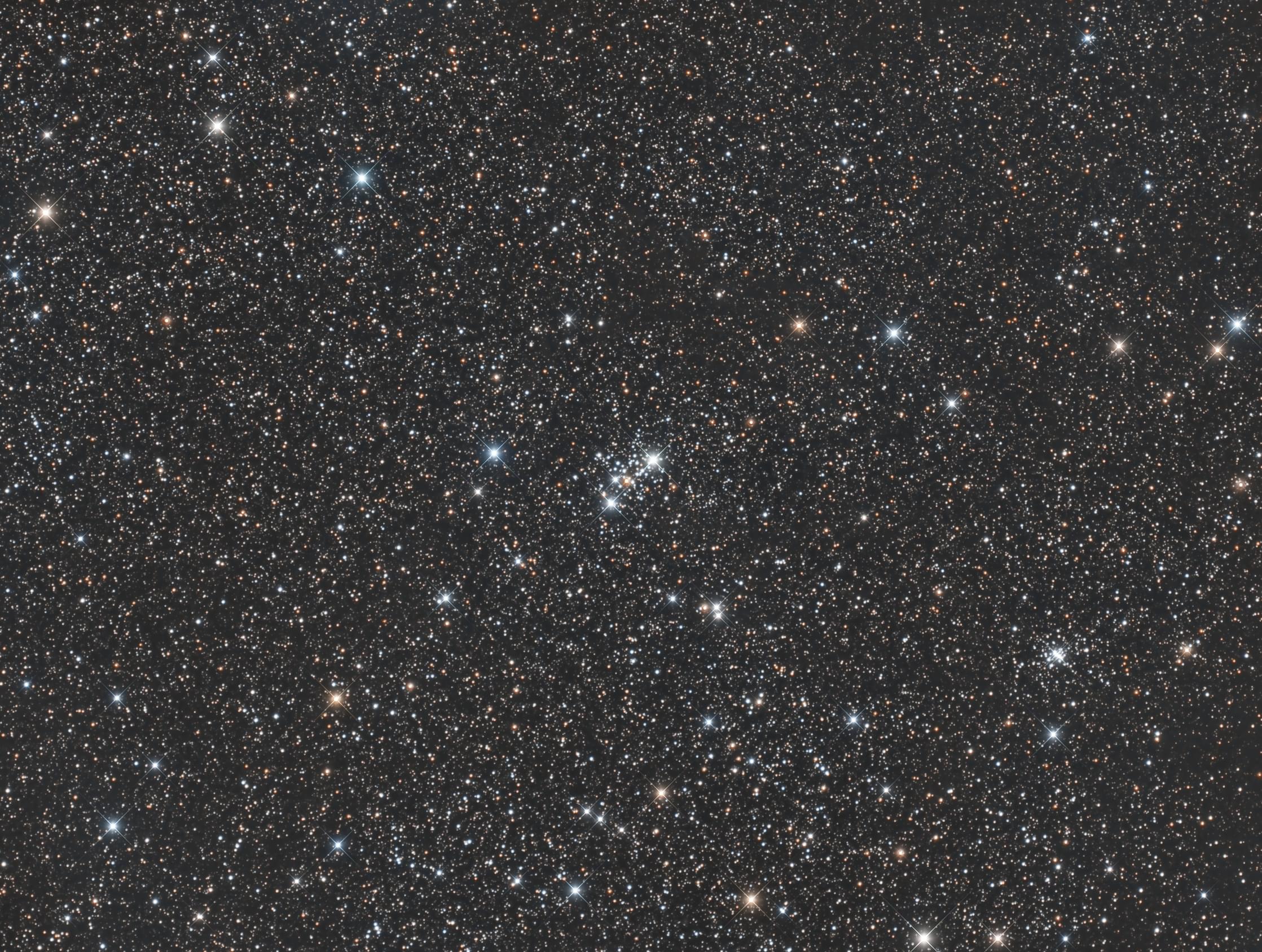
| Name / Constellation | M103 |
Cas |
||
| Coordinates | AR: 01h 33m 12s - Dec: +60° 42′ | |||
| Optics | Takahashi FSQ 106N APO Fluorite F5 - 60/220 guiding refractor | |||
| Camera-Mount | SBIG STF8300M - Orion StarShot Guider - 10Micron GM2000 QCI Mount | |||
| Filters | Baader LRGB | |||
| Exposure |
|
|
|
|
| Location / Date | Promiod (Valle D'Aosta-Italy) "TLP" Remote Observatory - 04 dec 2018 | |||
| Seeing | About 3.5-4" @ 2.1 arcosec/pixel unbinned | |||
| Note | Bad seeing | |||
| Acquisition | MaxIm DL - CCD Autopilot 5 | |||
| Processing | Adobe Photoshop CS6 -  |
|||
| Comment | Messier 103 (also known as M103, or NGC 581) is an open cluster where a few thousand stars formed in the constellation Cassiopeia. This open cluster was discovered in 1781 by Charles Messier's friend and collaborator Pierre Méchain. It is one of the most distant open clusters known, with distances of 8,000 to 9,500 light-years from the earth and ranging about 15 light-years apart. There are about 40 member stars within M103, two of which have magnitudes 10.5, and a 10.8 red giant, which is the brightest within the cluster. Observation of M103 is generally dominated by the appearance of Struve 131, though the star is not a member of the 172-star cluster. M103 is about 25 million years old.
|
|||