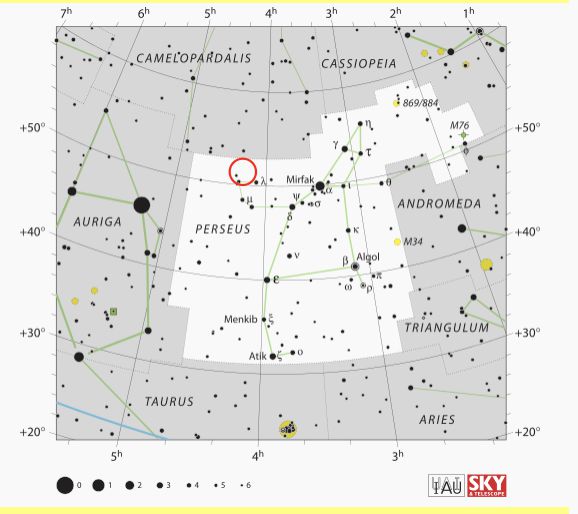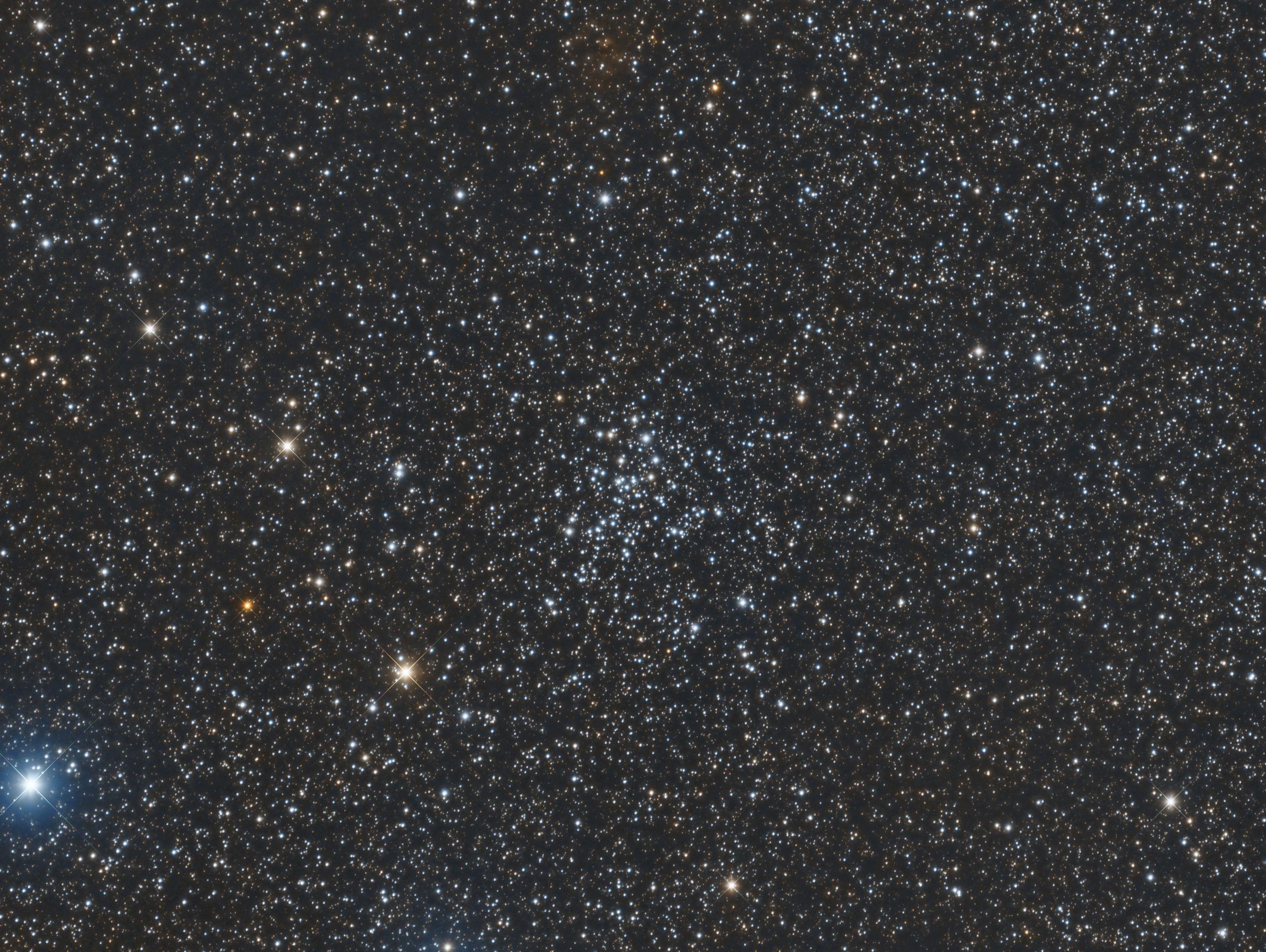
Click on the image for FULL RES |
||||
| Name / Constellation | NGC 1528 |
Other: Mel 23; Cr 47; OCl 397 | Per |
|
| Coordinates | AR: 04h 15m 23s - Dec: +51° 12′ 54″ | |||
| Optics | Takahashi FSQ 106N APO Fluorite F5 - 60/220 guiding refractor | |||
| Camera-Mount | SBIG STF8300M - Orion StarShot Guider - 10Micron GM2000 QCI Mount | |||
| Filters | Baader LRGB | |||
| Exposure |
|
|
|
|
| Location / Date | Promiod (Valle D'Aosta-Italy) "TLP" Remote Observatory - 31/12/2019 | |||
| Seeing | About 3.8 " @ 2.1 arcosec/pixel unbinned | |||
| Note | ||||
| Acquisition | MaxIm DL - CCD Autopilot 5 | |||
| Processing | Adobe Photoshop CC -  |
|||
| Comment | NGC 1528 is an open cluster in the constellation Perseus. It was discovered by William Herschel in 1790. It is located in the north-eastern part of the constellation, just under 3 degrees north of μ Persei. Less than 1.5° to the southeast is the open cluster NGC 1545 (m = 6.2). The NGC 1528 is clearly visible with 10x50 binoculars. 165 stars are recognised as members of NGC 1528, the brightest of which has apparent magnitude 8.7.
|
|||